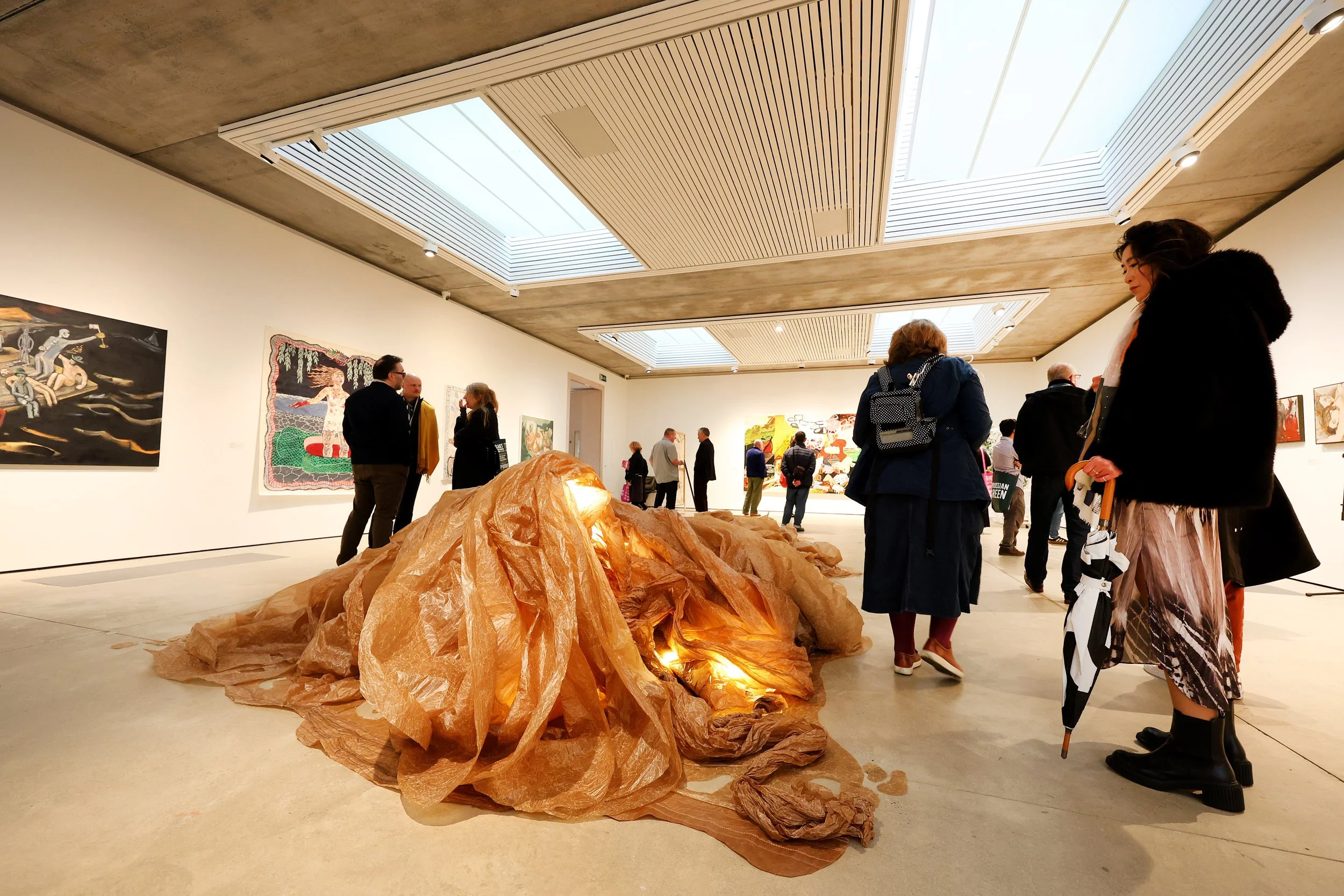
Moving Line (Shingle Coast)
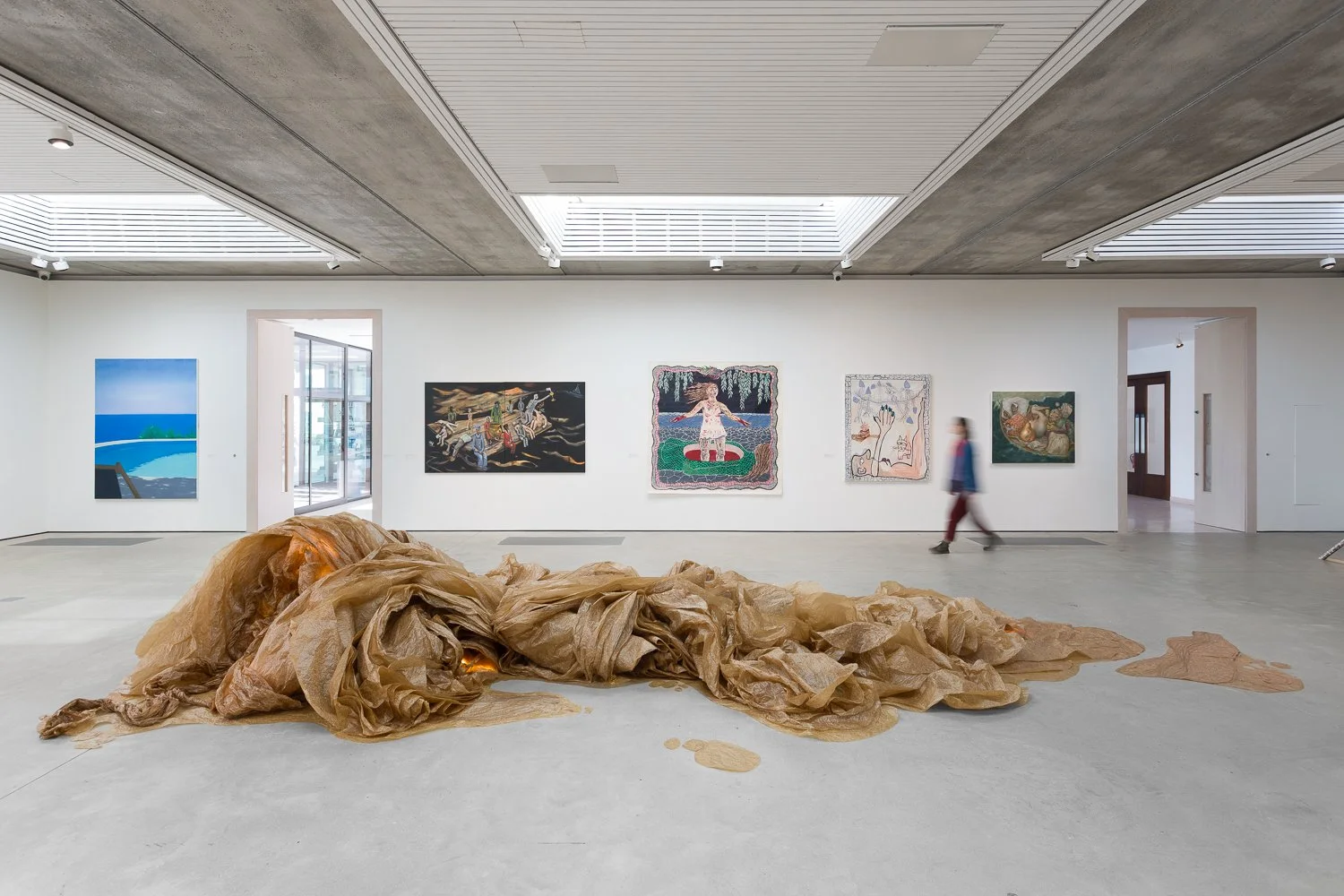
‘The Moving Line (Shingle Coast) ‘, Kate Howe, 2026.
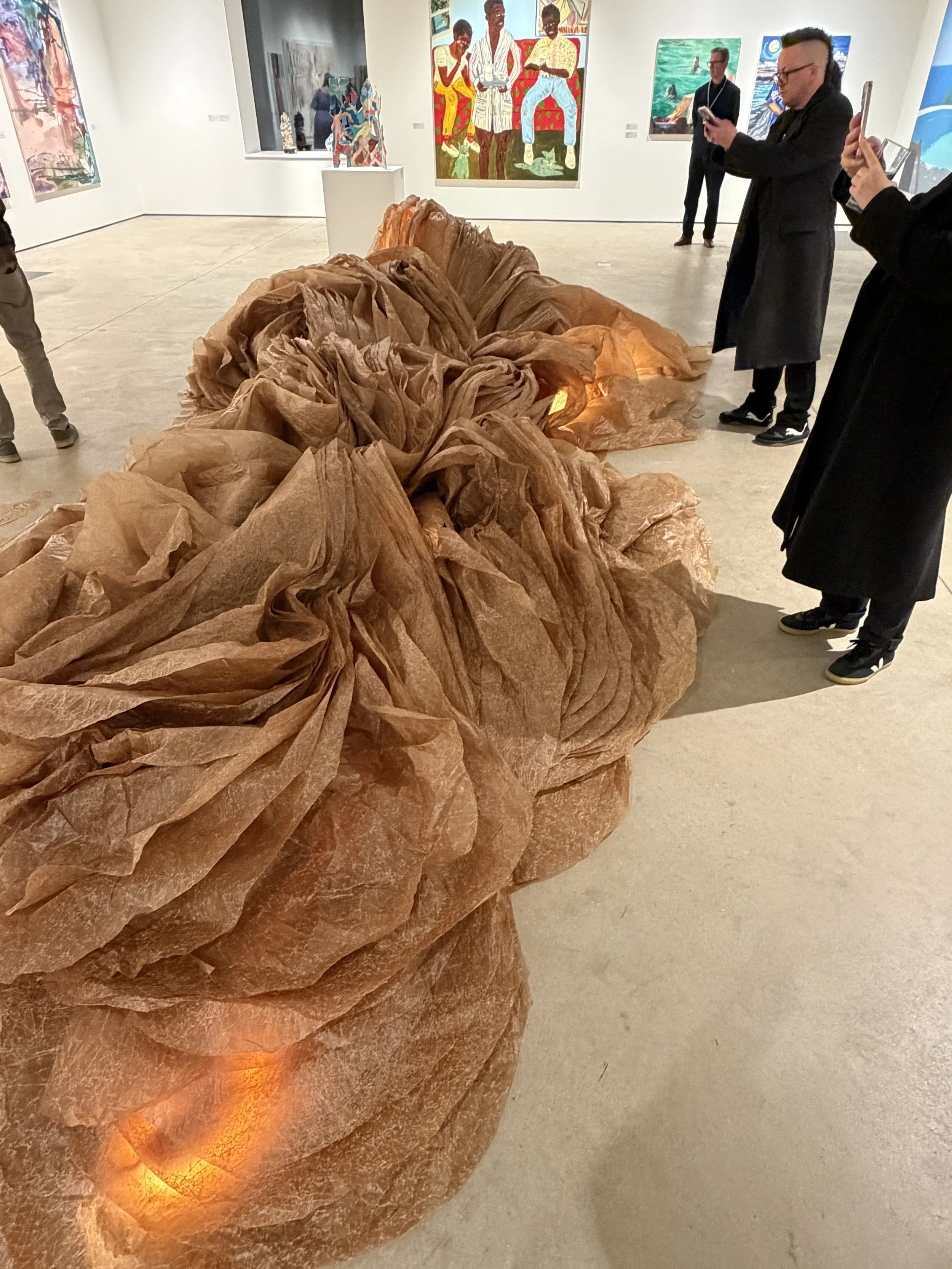
Site specific installation for Hastings Contemporary. Waxed Kraft paper, stitching, lights.
‘The Suffolk shingle coast is a coastline built from flint pebbles and gravel rather than sand. Because those stones are mobile, the shore behaves like a shifting surface: storms and tides pile the shingle into ridges, pull it back down, and move it sideways along the beach. Over long periods this movement can create substantial landforms—spits and “nesses”—that are continuously being rebuilt and reshaped rather than staying fixed. Both visibly geologic and visibly alive, the shoreline holds layered bands of past storm-events and reworking, so time is there for the reading - right there under your feet. Somehow this nomadic, heaving, remaking, always moving line is also its very structure.
My connection to the shingle coast is a tenuous family thread on the Cooley side of our lineage, dating from 1610. My deeper connection to coastlines, to the endless, lapping sea, is woven tightly through familial experience - I grew up in safety and security on the warm sands of Laguna Beach, in the frigid tidepools of the Bay Area, I was certified as a diver in the kelp forests off Monterey bay, and made a rescue diver in the shoals of Ao Nang in Thailand.
My father was a sailor, and all the most rooted, stable memories of my childhood are of the security of adventure - the sure feeling that to be underway to was to be in life - the feeling of the seaborne vessels of my childhood skimming through the water, waking up and looking out the porthole to see nothing but the vast and unending ocean, and trying going back to sleep, knowing my father was at the tiller, and adventure lay ahead.
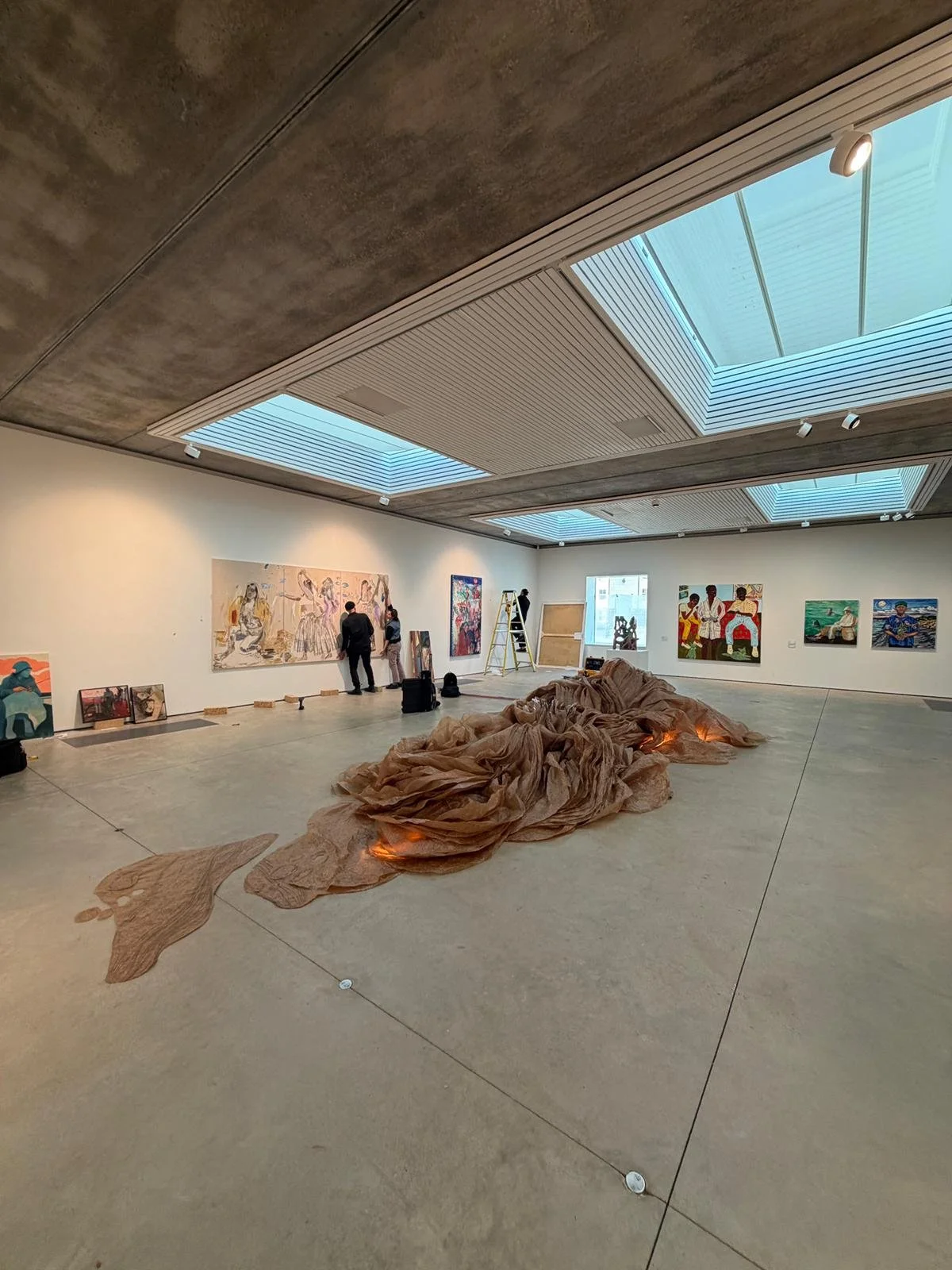
I was honored to be selected along with 149 other artists from over 2500 entries to show at Hastings Contemporary, and really thrilled to be offered the opportunity to build a site specific piece in situ in this gorgeous regional gallery. The day before my install, I drove down to Hastings, a tiny town full of the fantastic collision of Victorian love for the sea combined with post-war recovery architecture.
Install day dawned bright, crisp and bluebird, walking down the beach to the gallery, I got to feel the stones shift under my feet, watch the waves in a gentle lapping when just the day before they had been a silty collision of fury. If you have the opportunity to visit Hastings, I highly recommend it. The town is lovely, the beach is breathtaking, the show is really, really good. And my piece is my first ever floor piece, right there in the main room of the gallery, sprawling across the floor.
Made up of a kilometer of waxed Kraft paper, stitching, and lights nestled deep inside, this piece is special to me. The paper is a material I have been working with for about six years, now. It’s an industrial product, and I came across it while trying to remember a sculptural material my mother, who is also an artist, shared with me when I was very young. I have a memory of this paper, dipped in wax, holding its shape when it’s manipulated. I remember the wax crumbling if I moved it too much.
This particular paper is manufactured in Lincolnshire, since the mid 1700s, and has been used as an oil barrier when shipping machine parts, and was also used as patterns for garments cut on large factory machines. (The wax lubricates the shears).
For me, the paper is a long finger reaching out of my painting practice. The gestural lines I get with this glowing amber material are so familiar to me. The more I use it (I recycle and rebuild with the material of the previous piece) the more it moves like fabric, not paper. The older it becomes, the more nuanced, supple, and beautiful it becomes.
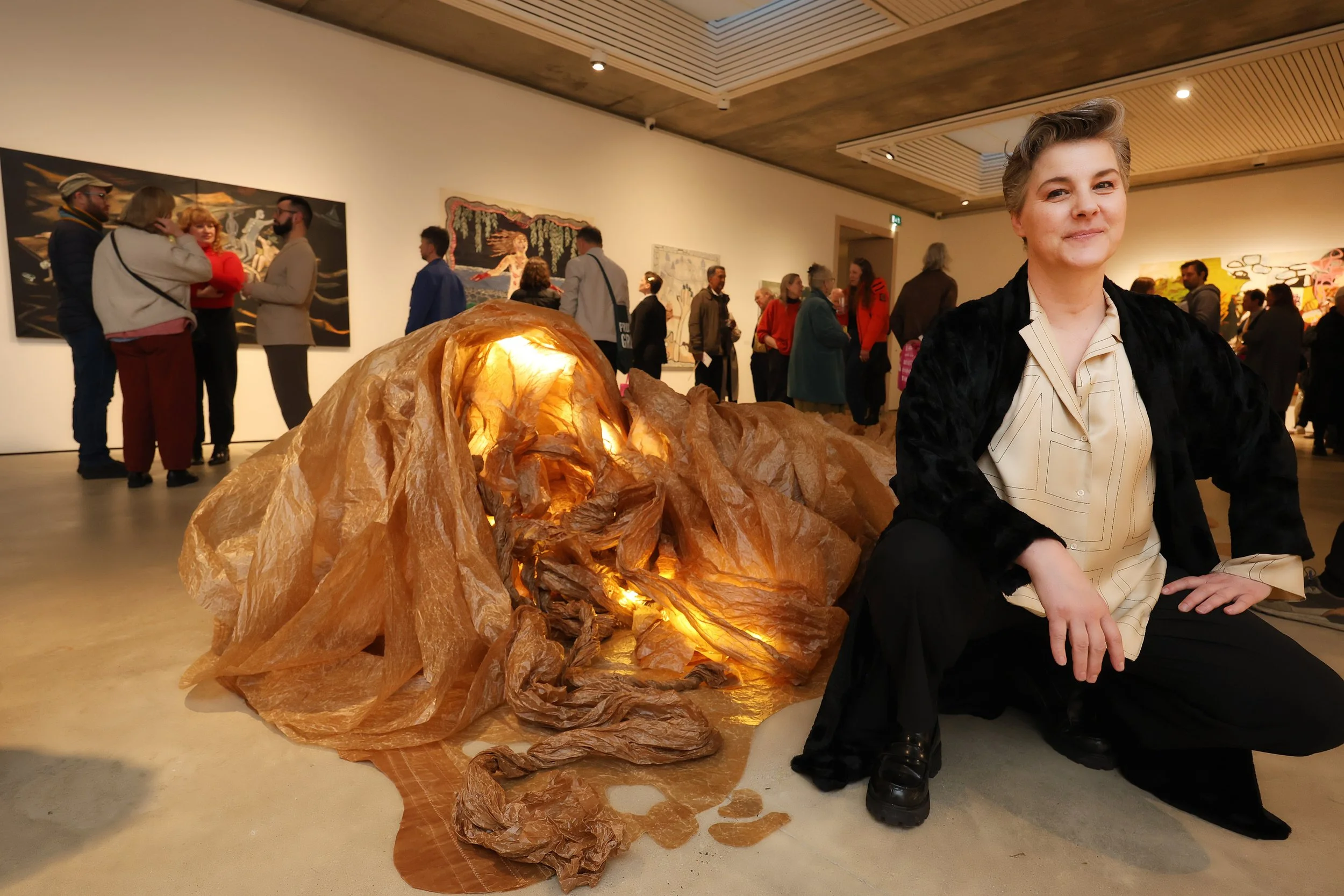
Artist Kate Howe with their installation: ‘The Moving Line (Shingle Coast) ‘.Photo: Sussex Contemporary
Building this piece for Hastings Contemporary is very exciting because I’ve always wanted to build a floor piece like this, it’s bringing together elements of installations from the last four years in a way that I’ve been really eager to try. The stitching, which occurs across my practice, is related to my grandmother, who was a master quilt maker, and to my mother, who made some of our clothes when we were young, and taught me to sew.
The feet of the feed dogs in my industrial machine leave footprints in the waxed paper. This is the mark of labor. Of women’s work. Of work that was, for a long time, not considered art. The stitching makes a mark in time, I was here, I existed, I mended, I made.
Time is always a suture in my practice - I am interested in deep time, slow time, elastic time, geologic time, human time. The shingle coast heaves these together in a way that is immediately visible. Footprints and nelles and diggers and the relentless tide are in continuous dialogue. To stand on this shore is to stand in a kind of hyper-temporality - to stand in the long now’. - Kate Howe.